
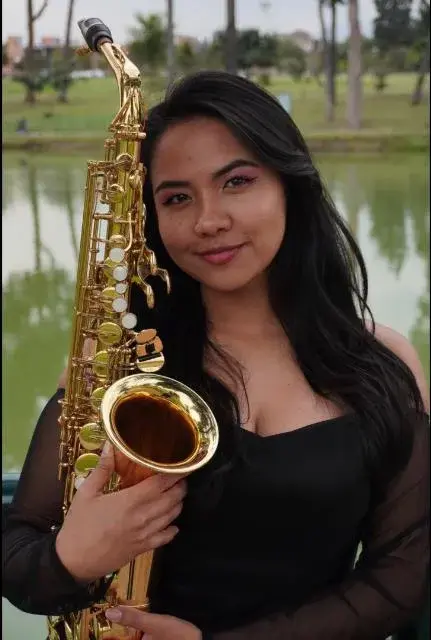
Dara C.🇨🇴
I'm Dara, a saxophonist who helps you fall in love with performing. Come explore this world full of magic with me.
WhatsApp
- Bogotá
- Online
- At home
Although made of metal, the saxophone belongs to the woodwind family because it produces sound with a reed, just like the clarinet. It is a defining instrument of jazz and also features in soul, funk, pop and Colombian tropical bands. Lessons work on tone, reading and improvisation from the start, using repertoire drawn from the music you enjoy listening to.
Every teacher has passed our assessment of musical skills, teaching ability and personal qualities before their first lesson. Explore their profile and contact them directly.
I'm Dara, a saxophonist who helps you fall in love with performing. Come explore this world full of magic with me.
From 9 years old
To be a reference, many children start at 9 or 10 years old, most often with high saxophone, with the most manageable size and weight. Before that age the instrument can be heavy and the keys are far from their fingers, so some children start with sweet flute and then they move to the saxe. It's an orientation guide: the teacher looks at the size of his or her hands, posture and motivation of every child. Adults can start at any age and many come to the saxo for his or her love of jazz or soul.
Impairment can be worked from an initial level, making every practice a creative space.
It fits into many groups: big gangs, jazz combes, rock and soul bands, tropical orchestras and symphonic bands.
Its flexible and close sound invites them to develop their own personal frambling.
It's very encouraging for teens and adults who want to play the music they listen to every day.
Virtual classes from anywhere or at home in Bogotá and surroundings for children, youth and adults.
Message us on WhatsApp with your age, level, availability and whether you prefer online lessons or lessons at home.
We recommend the teacher who best suits your goals, or you can choose directly from their profile.
Lessons at your pace, with clear practice tasks and feedback on your progress.
Most start with high saxophone, because its size, weight and endurance are intermediate and there's a lot of study material for it. Tendency is a good choice for teens and adults looking for a more serious sound. Soprane usually gets put up for later, because it's more picky to tuning.
It's made of metal but it's classified into the wood family because the sound's made with a cane that vibrates against the nozzle, as with clarinetThat's why they share a simple tongue and several digits.
Yes. The technical basis (sound, tuning, reading) is the same for any style but from an early date you can work with blues, simple standards and improvisation exercises. Your teacher balances technical and repertoire so that you build solid bases without losing motivation.
No. Readings are learned in parallel with instrument, step by step, and at the same time you develop your ear to get melodies, something key to jazz and popular music. If you want to strengthen reading by itself, you can complement with musical theory.
Tell us your age, level and availability. We'll reply on WhatsApp with the teacher who best suits your goals.


