How long should a music lesson last, and how many lessons a week should you take?
A music lesson usually lasts between 30 and 60 minutes and takes place once a week. Here is a chart by age, level, and goal, with the reasons behind each lesson length.
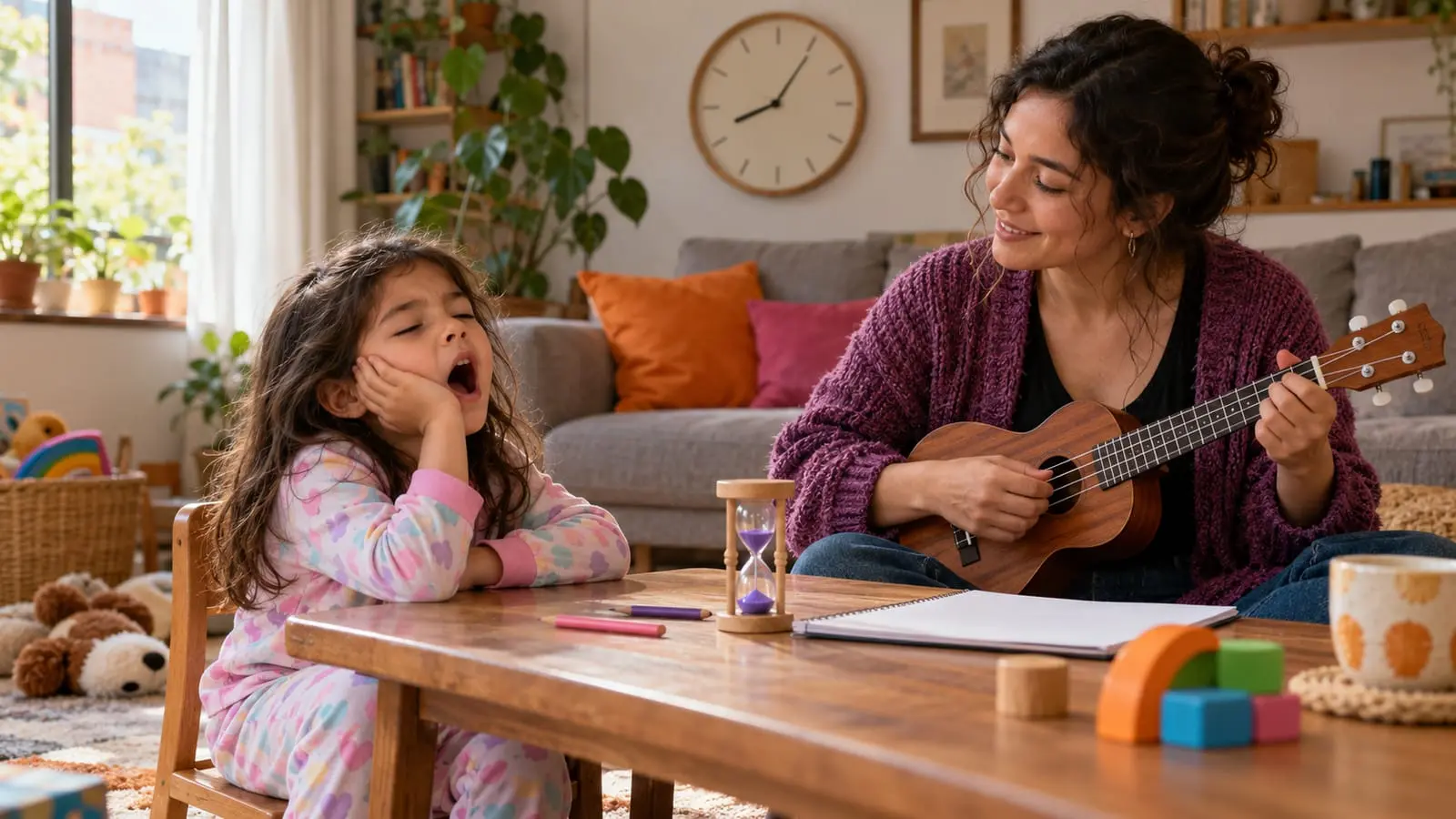
A private music lesson generally lasts between 30 and 60 minutes and takes place once a week. Young children do better with 30 minutes; 45 works well for ages 9 to 12; and teens and adults usually make better progress with 60. Two lessons a week are an option for specific situations rather than the rule, and they almost always call for shorter sessions.
The right lesson length depends less on how much you want to pay or how much free time you have than on the learner's attention span, the physical demands of the instrument, and how much they practice between lessons. If you are comparing in-home music lessons in Bogotá or online music lessons, this guide helps you decide what to ask for before contacting a teacher.
In short
- The most common arrangement is one lesson a week: 30 minutes for children ages 3 to 8, 45 for ages 9 to 12, and 60 for teens and adults.
- A longer lesson is not more productive if the student gets tired: attention and physical fatigue (fingers, lips, voice) set the limit.
- What matters most for progress is not lesson length, but short, frequent practice between lessons.
- Two lessons a week help with a goal that has a deadline (an audition or entrance exam), or with young children taking very short lessons.
- For woodwinds, brass, and singing, it is best to keep lessons within 45 to 60 minutes, including breaks, to protect the lips, breathing, and voice.
Recommended lesson length and frequency by age, level, and goal
This chart is a general teaching reference, not a rule: a teacher can adjust it to suit the student. Use it as a starting point when arranging lessons and talking with your teacher.
| Age or profile | Level and goal | Duration | Frequency | Why |
|---|---|---|---|---|
| Ages 3 to 5 | Introduction to music, play, and first experiences | 30 to 45 min (30 at age 3) | 1 lesson per week | Short periods of guided attention; the lesson alternates singing, rhythm, and movement. |
| Ages 3 to 5 | First instrument (piano or violin) | 30 min | 1 lesson per week | Just a few minutes at a time on the instrument; 5 to 10 minutes of practice at home. |
| Ages 6 to 8 | Beginner | 30 min at age 6; up to 45 around age 8 | 1 lesson per week | Can follow an explanation, but quickly tires of the same task. |
| Ages 9 to 12 | Beginner or intermediate | 45 min | 1 lesson per week | There is time for technique, reading, and a piece; some practice is independent. |
| Teenagers | Beginner or intermediate | 45 to 60 min | 1 lesson per week | More personally chosen repertoire and more independent practice. |
| Adults | Beginner | 45 to 60 min | 1 lesson per week | Long attention span, but little practice time: the lesson organizes the week's work. |
| Teens and adults | Intermediate or advanced | 60 min | 1 lesson per week | Longer repertoire, specific techniques, and detailed review. |
| Any age | Audition, exam, or admission preparation | 60 to 90 min, or 2 lessons of 45 | 1 to 2 times per week, for a limited period | There is a deadline and a lot to refine; daily practice increases too. |
| Woodwinds, brass, and singing | Any level | 30 to 45 min for beginners; up to 60 with breaks | 1 lesson per week (2 if lessons are short) | Lips, breathing, and voice tire before the mind does. |
If you are choosing between two options, start with the shorter one and extend it when the student finishes with energy rather than wanting to leave. It is easier to go from 30 to 45 minutes than to cut back after several frustrating weeks.
Why lesson length matters: attention, the body, and practice
A music lesson is not just a conversation: the student listens, watches, plays, and makes corrections at the same time. That uses up attention quickly, especially in children. Three factors determine the ideal length.
1. Sustained attention
The ability to stay focused on a task grows with age and also varies from child to child. A 4-year-old may be very attentive for just a few minutes, so the lesson is built around short blocks with changing activities. At age 10, the same block can last much longer, and an adult can work on a difficult passage for 15 or 20 minutes.
2. Physical fatigue
Each instrument tires a different part of the body. Guitar and violin tire the fingertips and left arm; piano tires the forearms and back if posture is poor; trumpet, trombone, or clarinet tire the lips and facial muscles; singing tires the vocal folds and the muscles used for breath support. Going too long is not just less productive: it can create tension that is hard to undo later.
3. Practice between lessons
Lessons set the direction, and practice at home does the work. A 60-minute lesson followed by a week without playing is far less effective than a 30-minute lesson with almost daily practice. To improve that side of things, see how many hours to practice a day and the home practice routine.
Lesson length for children, age by age
With children, the most common mistake is wanting long lessons “to make the most of them.” The opposite works better: short, focused, playful lessons.
- Age 3: about 30 minutes of introductory music activities, with singing, movement, and sounds. This is a stage for exploration, not technique. More details in music lessons for 3-year-olds.
- Ages 4 and 5: 30 to 45 minutes for introductory music; 30 when starting an instrument, with no more than about 10 minutes of continuous playing. We explain this in music lessons for 4- and 5-year-olds.
- Ages 6 to 8: 30 minutes at first and up to 45 around age 8. This is a good age to start an instrument more formally; see music lessons for children ages 6 to 8.
- Ages 9 to 12: 45 minutes is usually the sweet spot. There is reading, technique, and repertoire, and the child practices more independently; see music lessons for children ages 9 to 12.
For a child with attention difficulties or ADHD, 30 minutes divided into several short blocks may work better than 45 minutes straight, with the lesson extended once they feel comfortable. We discuss this in music and ADHD.
Teens and adults: 45 or 60 minutes
Teens and adults can sustain attention longer, and 60 minutes is usually a comfortable length. Still, 45 minutes may be better in three cases: when you are just starting and your fingers tire, after a long day of work or study, or when you practice very little during the week and cannot absorb more material.
An adult beginner with 3 free hours a week usually gets more out of a 45-minute lesson plus 20 minutes of practice almost every day than from a 90-minute lesson alone. For ideas on organizing that time, see learning music as an adult and our guides to piano as an adult and guitar as an adult.
90-minute lessons make sense at advanced levels or when preparing for an entrance exam, with long pieces, technique, and sight-reading to review. Even then, a good teacher includes a break.
One or two lessons a week?
Once a week is the standard format and is enough for the vast majority of students. It leaves time to practice, make mistakes, correct them, and come back with questions.
Two lessons a week can make sense in these situations:
- There is a deadline: an audition, entrance exam, or performance is just a few weeks away. Two 45-minute lessons are usually more effective than one 90-minute lesson.
- Very young children: two lessons of 20 to 30 minutes can work better than one of 45, because they repeat things more often. It is optional.
- Advanced students: one lesson can focus on technique and another on repertoire or reading.
- School breaks: an intensive period with more time available.
Two lessons a week do not replace practice: without it, students repeat in class what they should have worked on by themselves. And a lesson every two weeks often does not work well for beginners, because they forget so much between sessions. If that is all your schedule allows, ask your teacher for very specific assignments and short recordings of what to repeat.
Piano, guitar, violin, singing, and wind instruments: what changes
| Instrument | Beginner | Intermediate or advanced | What to consider |
|---|---|---|---|
| Piano | 30 min (children), 45 to 60 (adults) | 45 to 60 min | Two hands, reading, and posture: it helps to alternate technique, reading, and repertoire. A 30-minute piano lesson is good for children; 60 minutes suits someone who already reads music and plays longer pieces. |
| Acoustic guitar | 30 to 45 min | 45 to 60 min | Fingertips hurt at first; short, frequent sessions are better than long ones. See finger pain when playing guitar. |
| Violin | 30 min | 45 to 60 min | Demanding on the neck, arm, and ear. For young children, keep lessons short and varied. |
| Singing | 30 to 45 min | 45 to 60 min | The voice gets tired; the teacher alternates warm-ups, technique, and repertoire, and includes breaks. See your first singing lessons. |
| Woodwinds and brass (flute, clarinet, saxophone, trumpet, trombone) | 30 to 45 min | 45 to 60 min with breaks | Lips and breathing tire before attention fades. Rest is part of the technique. |
| Percussion and drums | 30 to 45 min | 45 to 60 min | Great coordination work; the lesson combines rudiments, reading, and rhythms. |
For woodwinds and brass, the teacher makes sure the student does not spend too long blowing without a break. If your lips feel swollen or you feel dizzy, stop the lesson or practice; you should not “push through.” The same applies to singing: vocal fatigue or hoarseness is a sign to stop.
How time is divided within a lesson
Lesson length matters less when the time is well used. Here is a 45-minute example for a student around ages 9 to 12:
| Block | Minutes | What happens |
|---|---|---|
| Warm-up and review | 5 to 8 | Play something familiar and review the week's assignment. |
| Technique | 10 | Scales, hand, bowing, or breathing exercises; with a metronome if the student already reads music. |
| Reading or ear training | 10 | Read a new passage or repeat a melody by ear. See how to read sheet music. |
| Piece or repertoire | 12 to 15 | Work on the current song in sections. |
| Wrap-up and assignment | 3 to 5 | Write down what to practice, how much, and how. |
In a 30-minute lesson for a young child, blocks are shorter and include play. In a 60-minute lesson, there is a second repertoire block or a deeper focus on a technical skill. If your child's lesson is one long block of the same exercise, it is worth talking with the teacher.
How to adjust lesson length with your teacher, at home or online
You do not have to get it right the first time. A good teacher observes how the student feels at the end of the lesson and suggests changes. With A medio tono teachers, you can take in-home music lessons in Bogotá and surrounding areas, depending on each teacher's availability, or online from any city; lesson length and scheduling are arranged with the teacher on WhatsApp.
- Tell the teacher the student's age, level, and how much they can practice between lessons, not just how much time is available for the lesson itself.
- Start with a shorter lesson and review after 3 or 4 weeks: do they finish with energy? Was any time left unused?
- For online lessons, young children usually manage less time in front of a screen; 30 minutes is a good starting point, and having an adult nearby helps.
- For in-home lessons, have a distraction-free space and the instrument tuned and ready, so no time is lost at the start.
- Discuss the cost with the teacher too. Price depends on several factors; how much music lessons cost explains what influences it.
Every A medio tono teacher is assessed for musical ability, teaching skills, and personal qualities before their first lesson, but the best lesson length does not come from a rulebook: it comes from observing the student. Ask for the lesson that serves them best, not the one that looks best on paper.
Frequently asked questions
How long is a music lesson for children?
Between 30 and 45 minutes for most children. At age 3, about 30 minutes of introductory music; ages 6 to 8, 30 to 45; and ages 9 to 12, 45 is usually comfortable. If the child gets distracted toward the end, it is better to shorten the lesson or divide it into more blocks.
Is a 30- or 60-minute piano lesson better?
It depends on age and level. For a child starting out, 30 minutes is most productive. An adult beginner usually benefits from 45 or 60. Once the student reads longer pieces, 60 minutes allows time for technique, reading, and repertoire in the same lesson.
How many music lessons a week should I take?
One lesson a week is enough for almost all students. Two lessons a week help when preparing for an upcoming audition or exam, or for very young children taking short lessons. In every case, practice between lessons matters more than the number of lessons.
Is taking music lessons twice a week helpful?
It helps when there is a goal with a deadline or when the student already practices consistently and needs more guidance. If they are not yet managing to practice between lessons, a second weekly lesson just repeats the same problem; build a practice routine first.
Are online music lessons the same length as in-person lessons?
They can be, although a slightly shorter format usually works better for young children because screen time is more tiring. For teens and adults, 45 or 60 minutes works well online, as long as the audio is good and the camera clearly shows the hands and instrument.
Sources
We checked the facts in this article against these sources on October 22, 2026.